Africa
Africa is not a physical destination in the narrative of The Old Man and the Sea but a persistent, vital memory that shapes Santiago's inner life. It is the continent of his boyhood, a place of raw beauty and formative experience that he carries with him into old age, dreaming of its shores and lions as a source of solace and identity. The memory of Africa serves as a counterpoint to the old man's present ordeal, linking his past vitality to his current endurance and providing a symbolic landscape of undefeated spirit.
Memory and Dream
Santiago's connection to Africa is established early as a personal history that sets him apart. When the boy Manolin speaks of baseball, the old man counters with a memory of his own youth: "When I was your age I was before the mast on a square rigged ship that ran to Africa and I have seen lions on the beaches in the evening" . This is not a boast but a quiet assertion of a different kind of life, one lived on the open ocean and along a wild coast. The memory is so deeply ingrained that it dominates his sleep. In his shack, he "dreamed of Africa when he was a boy and the long golden beaches and the white beaches, so white they hurt your eyes, and the high capes and the great brown mountains" . These dreams are not random; they are a nightly ritual. "He lived along that coast now every night and in his dreams he heard the surf roar and saw the native boats come riding through it. He smelled the tar and oakum of the deck as he slept and he smelled the smell of Africa that the land breeze brought at morning" . The sensory richness of the dream—the sights, sounds, and smells—makes Africa a more vivid and present reality than his waking poverty.
The Lions as a Central Image
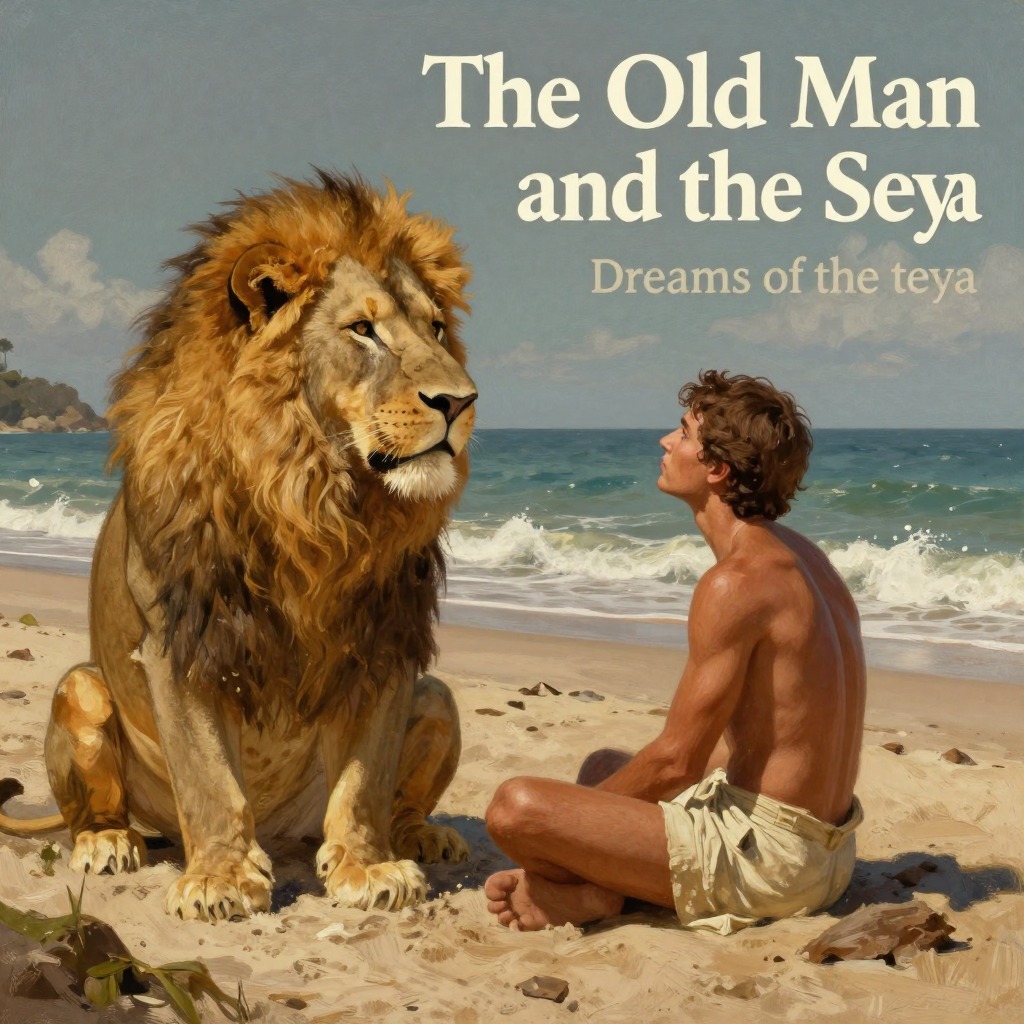
The most significant element of Santiago's African dreams is the lions. They are the primary image that remains with him as he ages. "He only dreamed of places now and of the lions on the beach. They played like young cats in the dusk and he loved them as he loved the boy" . The lions are not hunted or feared; they are loved, playing in the evening light. This image of untamed, joyful power becomes Santiago's personal emblem of what is good and worth preserving. During the long, painful struggle with the marlin, he wishes for rest and the dream: "I wish he'd sleep and I could sleep and dream about the lions" . The lions represent a state of peace and natural grace that he aspires to, a counterbalance to the violence and exhaustion of his fight. The novel ends with Santiago, having lost the marlin's meat to sharks, sleeping again and "dreaming about the lions" , suggesting that this core image of his youth endures beyond any defeat.
Contrast with the Present
Africa also serves as a measure of Santiago's physical decline and his enduring spirit. His eyes, which are "the same color as the sea and were cheerful and undefeated" , are a direct link to his past. When Manolin marvels that Santiago's eyes are still good despite years of turtle fishing, the old man replies, "I am a strange old man" . This strangeness is partly his African past, which has given him a resilience that his peers lack. The memory of Africa is a private resource, a fund of strength he draws upon when alone. It is a world of his own, untouched by the pity of the other fishermen or the commercial realities of the Terrace. While the younger fishermen see the sea as a masculine contestant or an enemy, Santiago, with his older, more intimate knowledge, thinks of it as feminine, la mar, a view perhaps shaped by his early voyages to a continent he first encountered as a boy before the mast. Africa is the foundation of his identity as a fisherman and a man, a place where he learned the endurance that now allows him to say, "A man can be destroyed but not defeated" .